St Peter's CE Primary School
Art & DT
Welcome to the Art and D.T Page!
Here you can find out what we've been up to during out Art and Design and Design and Technology lessons.
At St Peter's we believe all children are artists and inventors and we try to instill this belief in all of our children.
We hope you enjoy looking at this page and can see the children's creativity and individuality through their fantastic work.
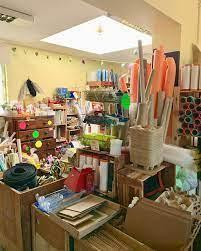
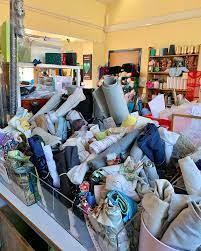
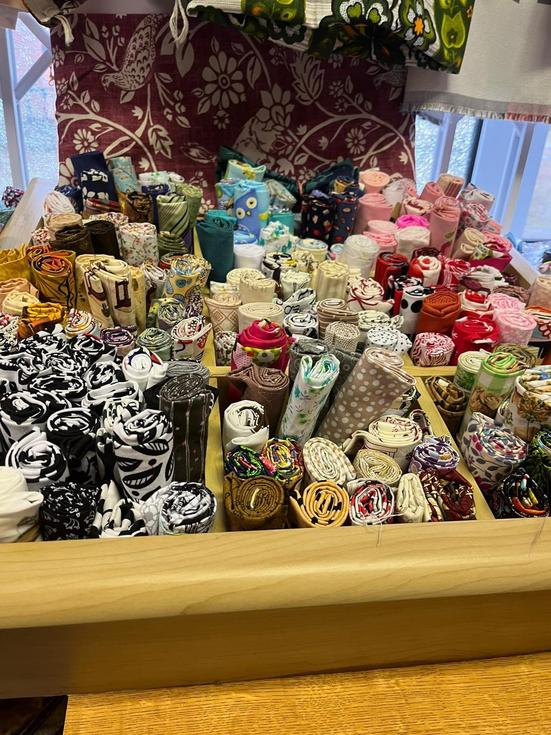
At St Peter’s we are proud to source many of our Art and Dt resources from The Scrapstore. The Scrapstore is a part of Birmingham PlayCare Network, who are a third sector organisation passionate about promoting both the importance of play and high-quality play opportunities for children and young people.
They support the reuse of unwanted materials that have been donated by businesses and individuals across Birmingham. The Scrapstore collects and sorts waste/surplus materials which will often be diverted to landfill and redistributes it to out-of-school providers, schools, community groups and individuals. The Scrapstore offers out-of-school providers, schools, community groups and individuals the opportunity to access a wide range of high-quality materials, save money and promote the reuse of waste materials.
We visit The Scrapstore each term to collect a variety of resources needed to support the teaching of our wonderful Art and Design and Design and Technology curriculum. We really value the relationship we have with all of the team and hope to have a long-lasting association with such a fantastic organisation.
At St Peter's our children are able to attend Create Club. It is an after-school club that provides children with a hands-on experience of process art. The activities aim to encourage children's creativity, imagination and critical thinking skills through a variety of open-ended art activities. Using various art activities, children are encouraged to develop their imagination and create artwork that reflects their own ideas and interests. Children are encouraged to make decisions, problem solve and experiment with different materials, equipment and techniques. We celebrate a child’s natural curiosity, individuality which in turn helps with their self- esteem. Our Create Clubbers enjoy working together with others who they may not know that well which builds a sense of community within the club.
The 3 year rolling programme looks at different aspects of art, but also builds on the curriculum with strong links to English, Science, Technology, Art and Design, Geography, History and Maths.
We believe Create Club benefits children by enhancing creativity and expression, developing fine motor skills, helps to develop their own learning journey, encourages social interaction and collaboration and provides a safe space where children can confidently explore new materials and ways of thinking about art.
Our Create Clubbers have lots of fun during sessions, are proud of their achievements and are happy to talk to their friends, teachers and family about all their awesome creations!
Autumn Term
Nursery Art
In Nursery, children begin to develop their drawing skills through weekly guided drawing sessions, where they explore a range of drawing tools, materials and surfaces. They learn to experiment with different marks and lines, gradually developing greater control and confidence in their
drawing.
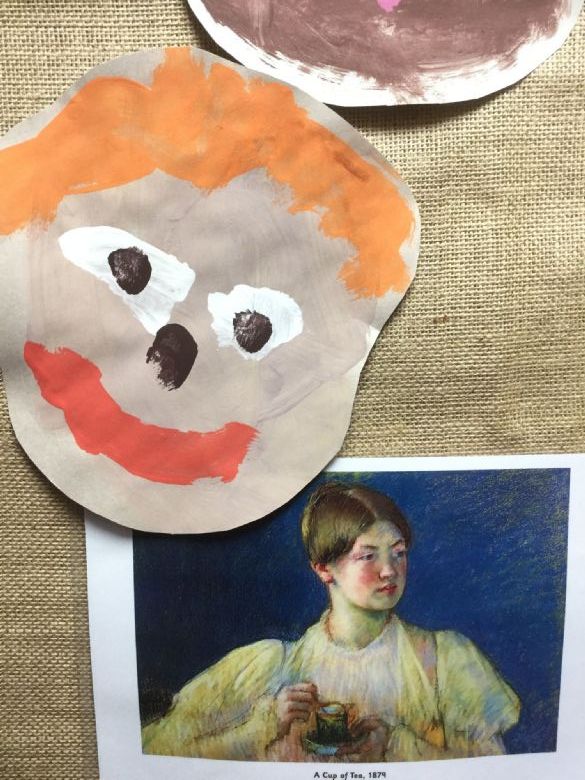
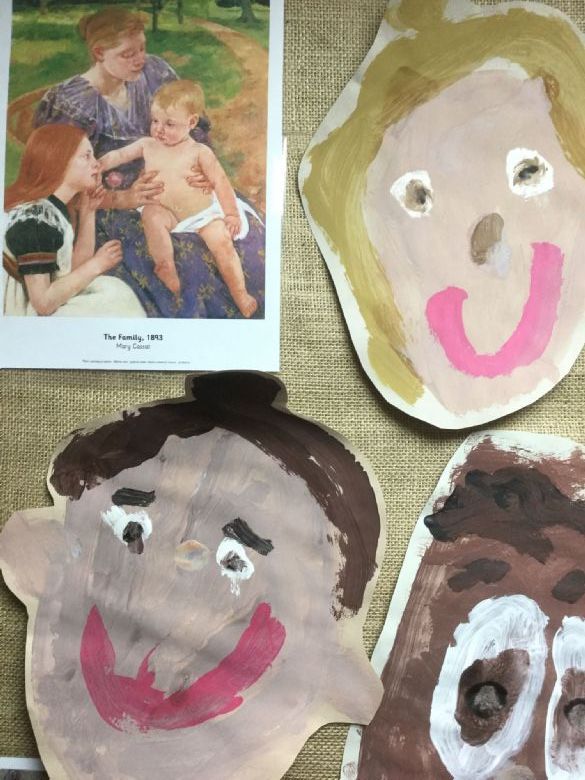
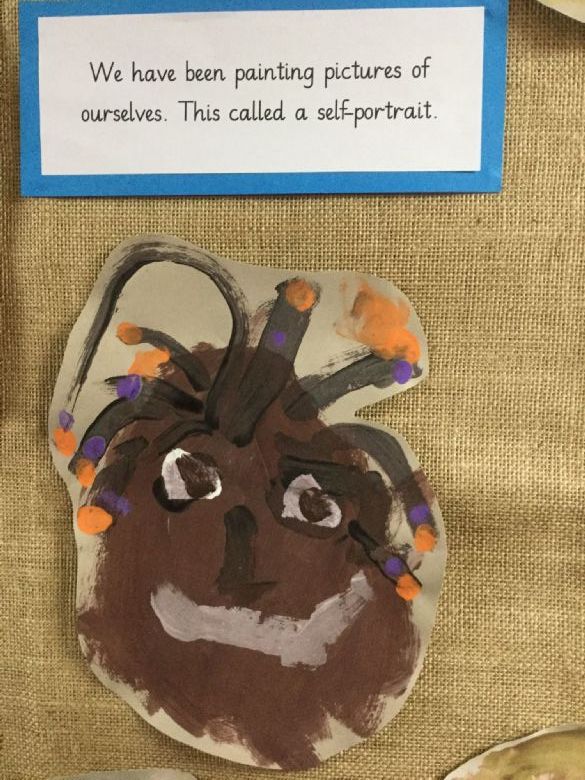
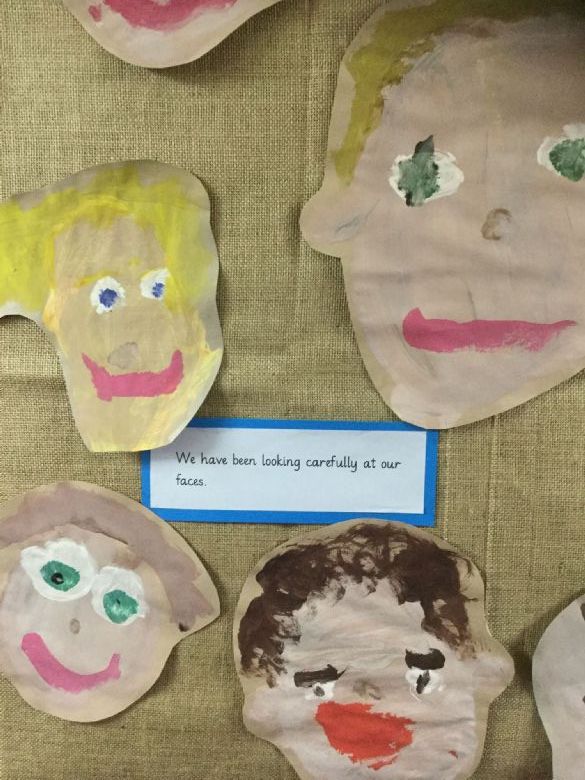
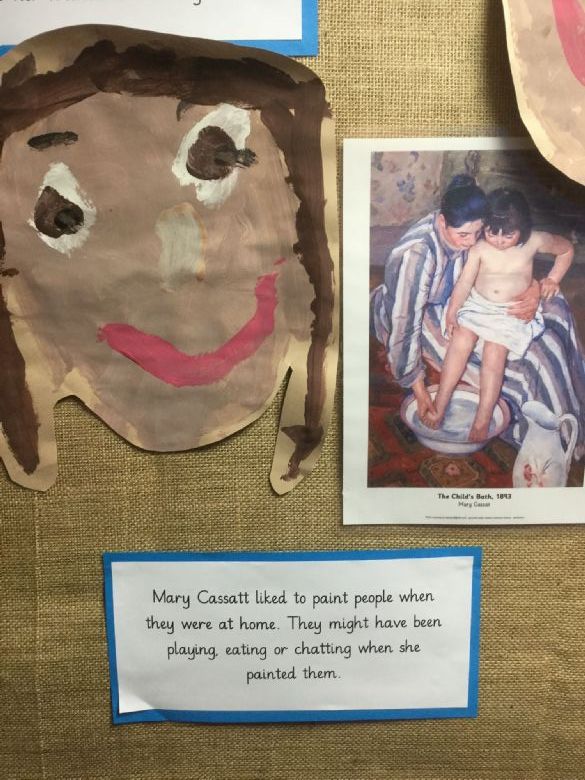
This term, children explore the theme of portraits, looking at and talking about different types of portraits, including the work of artist Mary Cassatt. They developed their observational skills by looking closely at their own facial features in mirrors and learning how to represent these through drawing. Children have opportunities to create their own self-portraits, explore how facial expressions can communicate different emotions and experiment with a range of media. Throughout the project, children are encouraged to talk about their artwork, share their ideas and celebrate their creations through a classroom art gallery.
Nursery DT
The Nursery children learnt lots of new skills in their DT week. Firstly, they started by learning how to use scissors correctly. This was supported by a whole class scissor lesson and then multiple cutting activities in the continuous provision, including activities from their spine book The Paper Dolls.
The children were told that the figures from the classroom wanted to explore the school, but their legs were too small. The children were asked what they could make to help the figures explore. The children designed the vehicle they would make by sticking together different 2D shapes.
The children then discussed what was special about a vehicle and what key parts it needed. Their teacher wrote down the children's ideas to use in the making phase. Then they explored different types of vehicles in their continuous provision and made some using simple construction toys.
Afterwards, the children set to building their vehicles using junk modelling materials. The children were able to use a range of joining materials, including glue, masking tape and Sellotape.
The children spent lots of time considering how they wanted their vehicle to look and what it needed. They were really proud of their creations and enjoyed sharing their work with others.
Reception Art
One of Reception’s spine books is Rosie’s Walk by Pat Hutchins. The children explore this book as part of their Me and my community topic by talking about different places they may visit in their community.
Firstly, the children are able to explore different books by Pat Hutchins to see if they can notice any repeated colours or patterns. The children are then asked if they can name any types of lines they can see.
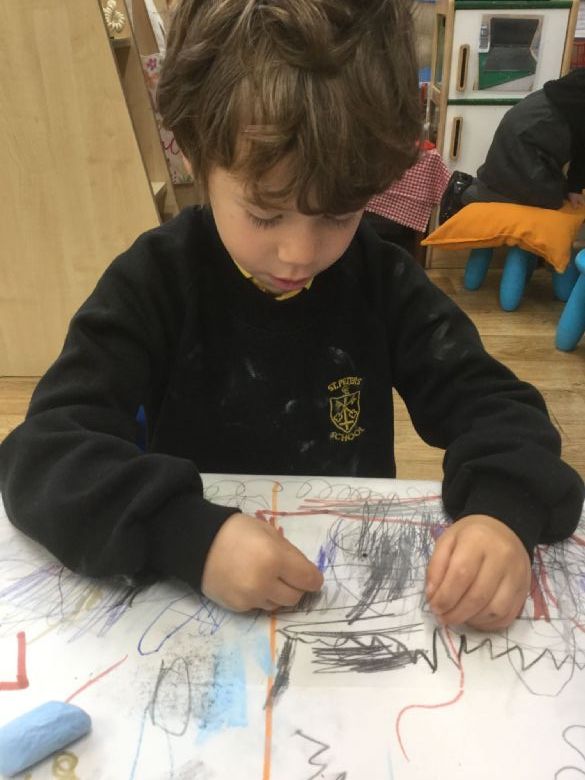
Then, the children go on to learning about different types of lines, including wavy, dotted, vertical, horizontal, dashed, zig-zag and spiral. They especially like creating zig-zag and spiral lines. Once the children have explored these types of lines, they are shown how to produce lines of different thickness and tone using a pencil. The children are given the chance to explore different types of lines and tone using different drawing tools, including oil pastels, chalk, wax crayons and graphite sticks.
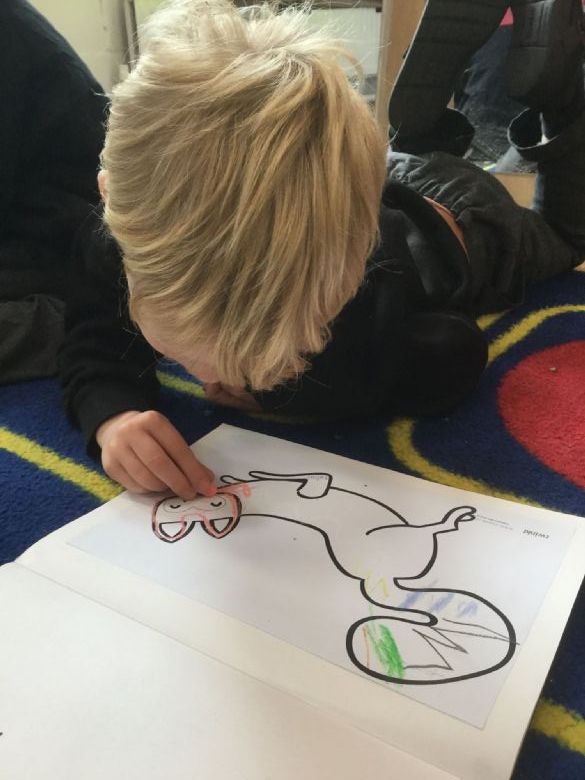
Afterwards, they are given the chance to re-create a character from the Rosie’s walk story by using a character template, choosing 3 colours and a range of drawing tools.
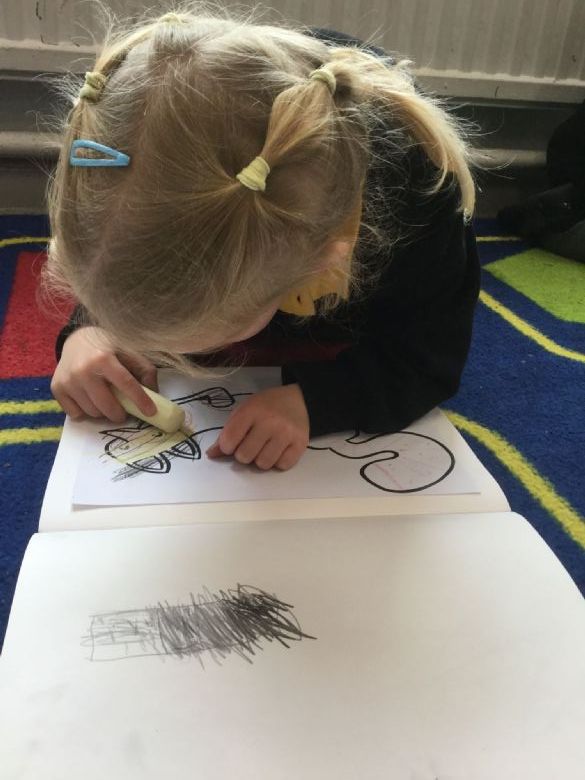
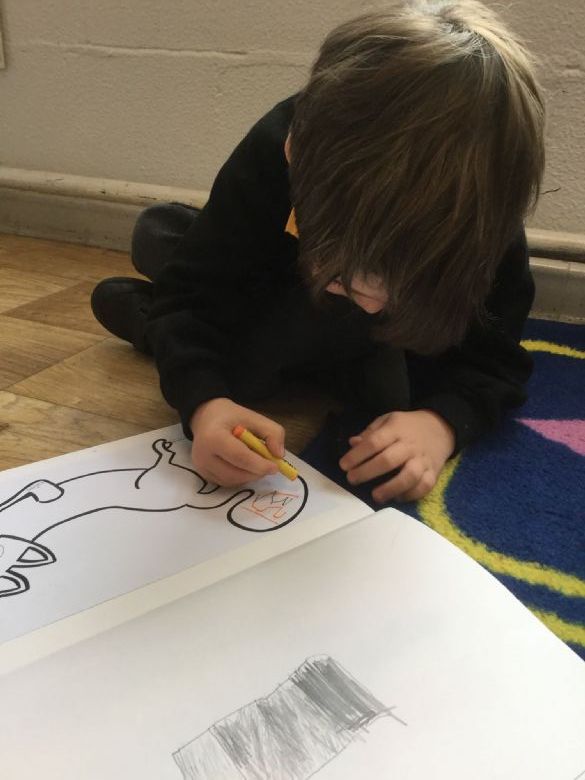
The children move on to learning about relief printing. As a class, they talk about their different experiences of printing, which may include potato printing, natural art printing and hand printing. The children learn what a relief print is and how it is created. They go on to learn the names of the tools and materials they need to make their own print. Using the different lines the children learnt about, they created their own printing block using Styrofoam. As a class, the children choose 3 colours they would like to use, and they create a whole class print using their own individual blocks.
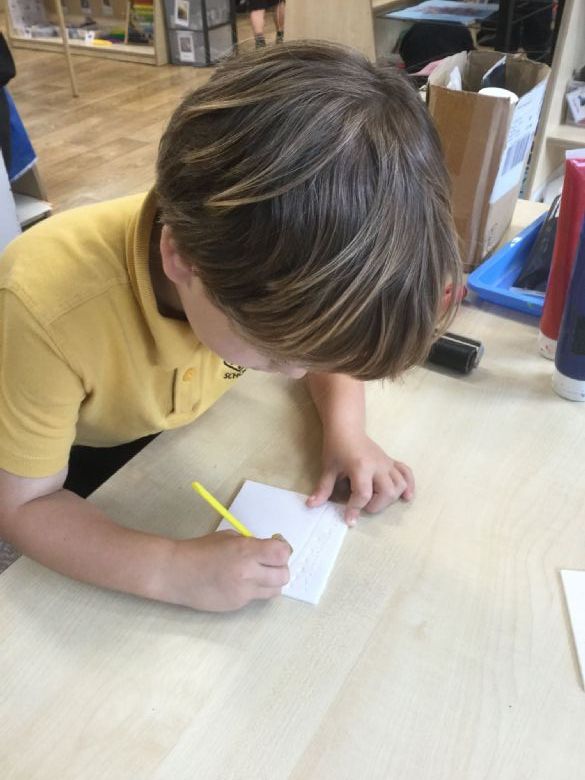
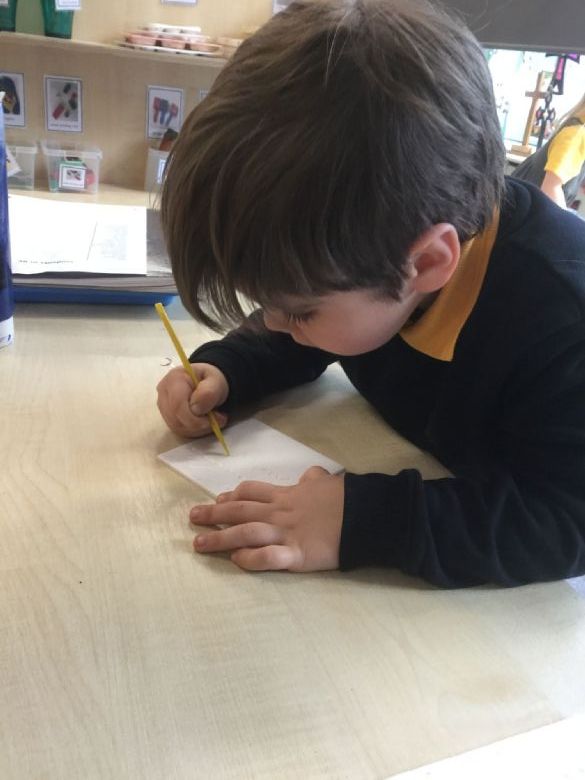
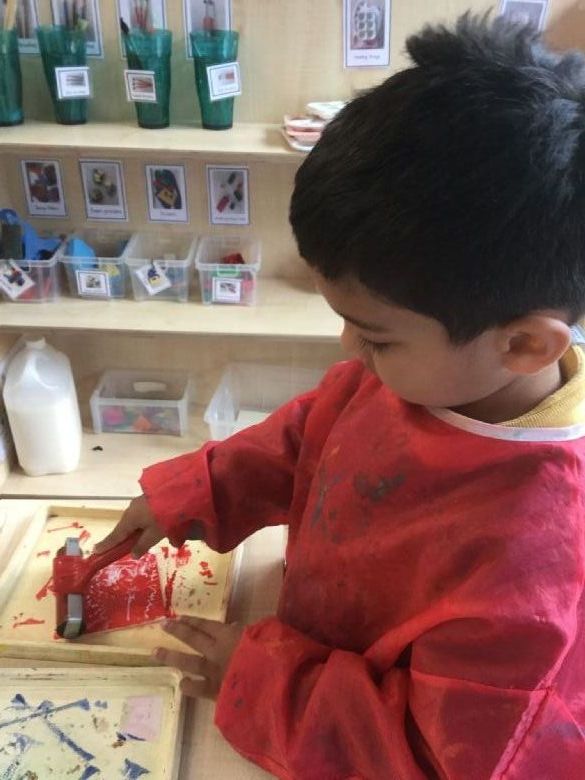
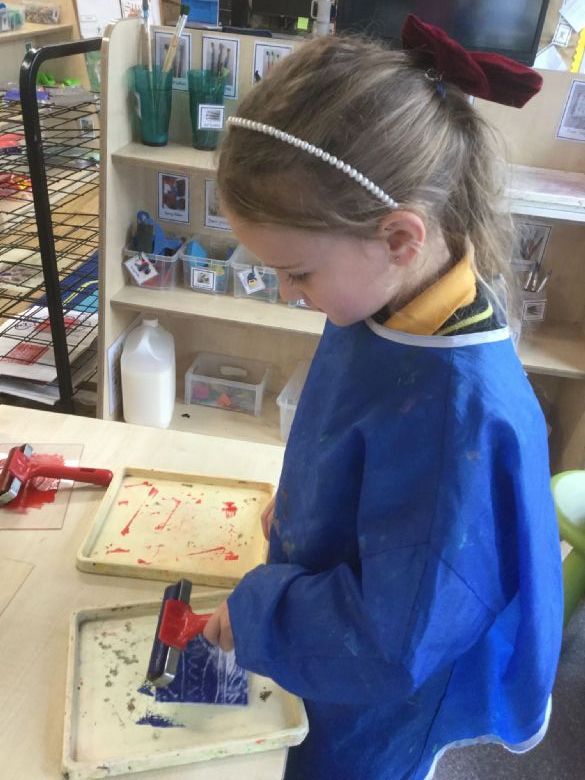
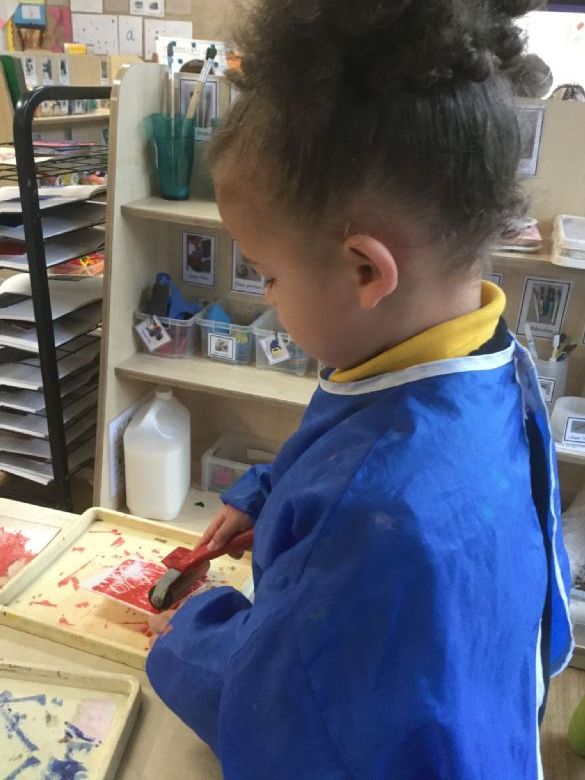
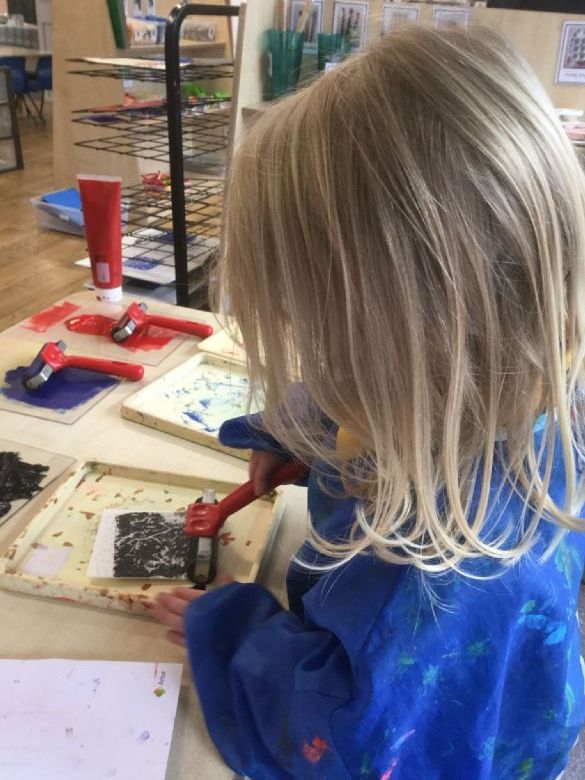
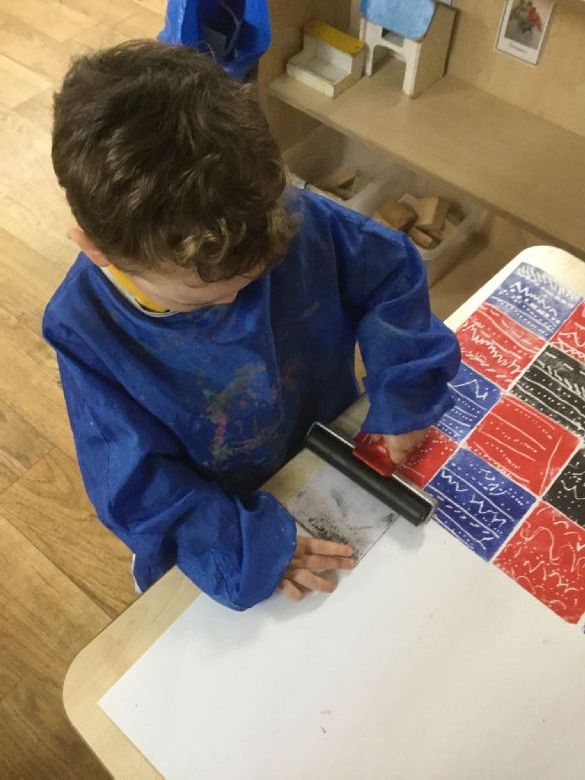
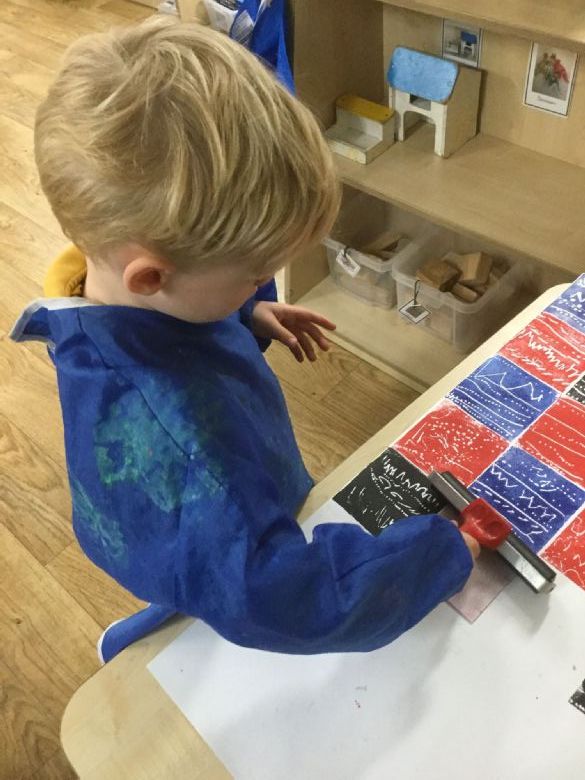
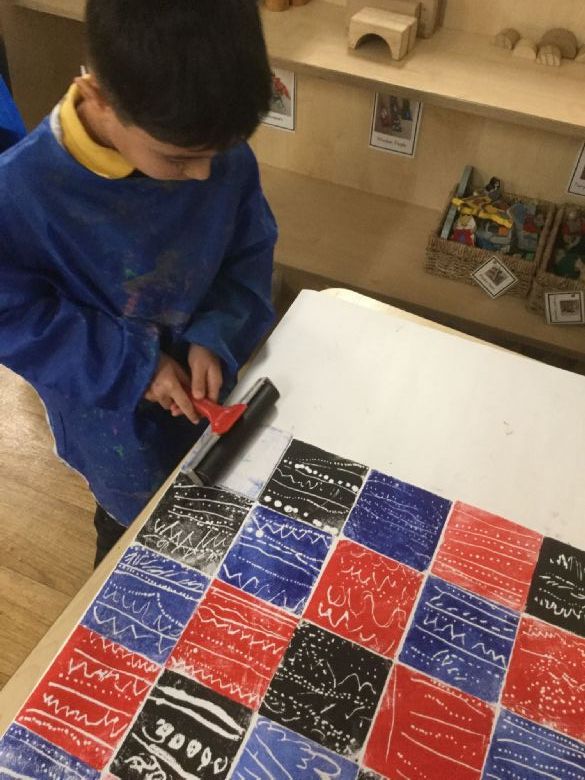
The children absolutely love learning about different types of lines, and it’s wonderful to see them using them in the continuous provision. It is also fantastic to hear the children using words like tone and language related to line thickness independently.
Year 1 Art
In Year 1 the children continue their art journey by learning about Leonardo Da Vinci and Henry Moore. With specific focus on their drawings of various body parts. The children are shown a selection of images and talk about the similarities and differences between the different artists.
The children then closely observe their own anatomy and have a go at drawing what they can see in their sketchbooks. They are able to use a variety of drawing tools for exploration, including pencils, rubber crayons, pastels, charcoal and chalk.
They go on to build on the skills they have learnt in Reception by developing a range of tones using a pencil. The children learn about drawing techniques such as hatching, scribbling, stippling, and blending to create light/ dark lines and have the opportunity to explore these techniques independently. The children have also explored texture by creating rubbings and drawing different textures using a pencil.
Year 2 Art
Year 2 start by learning about colour by exploring the work of Jackson Pollock and Mark Rothko. They begin by describing the differences and similarities between their practices and disciplines.
They go on to exploring colour by exploring mixing in their sketchbooks. They go on to creating a colour wheel to explore primary colour to make secondary colours. After, the children are taught to experiment in lightening and darkening without the use of black or white by creating shades of secondary colours.Then the children to use their sketchbook to mix colour shades and tones by making as many tones of one colour as possible (using white). Children are taught to control the types of marks made with the range of media, using a brush to produce marks appropriate to work. E.g. small brush for small marks
By this point the children have had lots of experience of mixing colours and creating new ones. They go on to creating their own ‘drip painting’ on canvas inspired by Jackson Pollock. As you can imagine the children come alive when creating this work and everything gets rather messy!
Year 3 Art
In Year 3 the children revisit Leonardo da Vinci by comparing his work with Michelangelo. The children begin by viewing large scale pictures of the artist’s work, like an art gallery. They are encouraged to choose their favourite and least favourite, stick these images in their sketchbooks and write their thoughts and feelings about the both drawings.
The children were then taught about the history of both artists, including their rivalry. After that, they created a double page spread of interesting facts they had learnt about each artist.
Then the children were taught about Da Vinci’s notebooks by watching a video which explores them. They were encouraged to use their own sketchbooks, much like Da Vinci did, to record media explorations and experimentations as well as planning and collecting source material for later work. We feel it is important that the children are instilled with the confidence and freedom to use their sketchbook however they like during art lessons.
After, they were taught about the artists use of red and black chalk and were given the opportunity to experiment and explore this medium in the style of the artists. They were also given different drawing mediums to help them experiment and understanding that they can be used in different ways to create different effects and textures.
The children then moved on to consolidating their previous knowledge of graded pencils by drawing different forms and shapes in the third dimension and learning about proportion. Finally, the children were taught about how many artist including Da Vinci searched for rules to apply to proportions of all bodies. Their teacher modelled using these rules to draw their own head. Then the children had a go at drawing the human body using a range of graded pencils.
Year 4 Art
In Year 4 the children start by taking their pencil for a walk. Their pencil was not allowed to come off the page for 30 seconds. When asked to stop, the children were shown examples of zentangles, and encouraged to fill in three shapes with the patterns that were modelled. This builds on their line work from Reception and Year 1.
Next, the children learnt about tone and how to show depth and shadow. They then created a value scale in their books. The children then shaded different shapes to create shadow. The children were encouraged to think carefully about how light travels and to envisage a source of light shining from one side of each shape.
Then, they were taught about how different textures are created in drawings and paintings. Firstly, the children took pieces of paper outside with wax crayons to take rubbings of natural textures they could find. They also tried to recreate the texture free hand.
After, the children were taught about landscape drawings and how tone and texture is used to create landscape drawings. They looked at the work of Ansel Adams a famous American landscape photographer and discussed different features of landscapes using key vocabulary in a spider diagram.
Then they were shown how perspective works in landscape drawings and they learnt about the horizon line and vanishing point. The children then went to explore landscapes in our local area and took photographs which they had a go a re-creating in their sketchbooks.
Year 5 Art
In Year 5 the children build on their drawing skills by learning about Giorgio Morandi. The children focus on line, tone, pattern and texture (shading and hatching) as well as discussing composition and perspective.
The children go on to draw a still life object using their knowledge of how to show depth and shadow from Year 3. The children are encouraged to draw for a sustained amount of time which is a skill in itself!
After they were taught that Morandi not only drew still life but he also drew landscapes. The children were shown a range of his work and were encouraged to look back in their sketchbooks to the work they did in Year 3 on landscapes.
The children were then given a choice to 3 photographs of the local area to draw to show their development of simple perspective, a single focal point and horizon line. The children were also encouraged to use their knowledge and experience of drawing scale and proportion from previous years.
Finally, they were given the opportunity to evaluate and discuss own and others work by expressing thoughts and feelings. They were able to identify any changes that could be made to improve their own and others work and also to compare work to the artist we have studied.
Year 6 Art
Year 6 start their final year Art and design journey by learning about collage. This is an area of art the children have learnt since Reception class. This topic is focused on the key issues in the world at the present time. The children were shown 4 topical world issues and they were asked to discuss their thoughts and feelings about these issues.
The children then moved on to learn about the work of Raoul Hausmann.
The children were given these questions to answer Is this art? What do you think the artist is trying to convey? Does art have a place in politics? They were then given more information and asked to research Hausmann to create a double page spread about his influences, movements and his use of satire.
After, they learnt about Barbra Kruger and what influenced her as a collage artist. The children compared her collage art to Hausmann’s and talked about the use of black and white images against the blocked red text.
The children explore collage by making a photomontage about themselves or a family member. Using the skills, they have learnt the children went on to create a photomontage about one of the key world issues. They listed the types of images they wanted to use and were encouraged to think about Hausmann’s and Kruger’s use of satire.
Art and Design Staff Training
2023
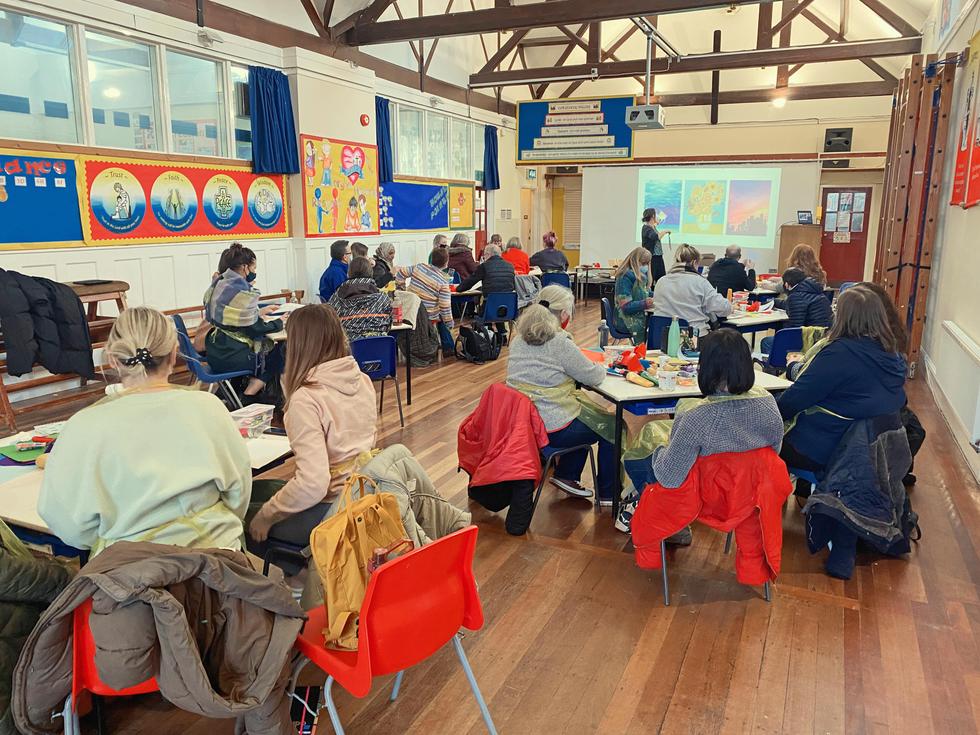
On Tuesday 2nd January the staff at St Peter's had a teacher training day. We used this opportunity to develop our art and design skills. This year we focused on drawing. We spent the morning reviewing the teaching of art and design across the school and we had a 'sketchbook buffet' where all teachers could look at the progression of skills by looking at each year groups sketchbooks.
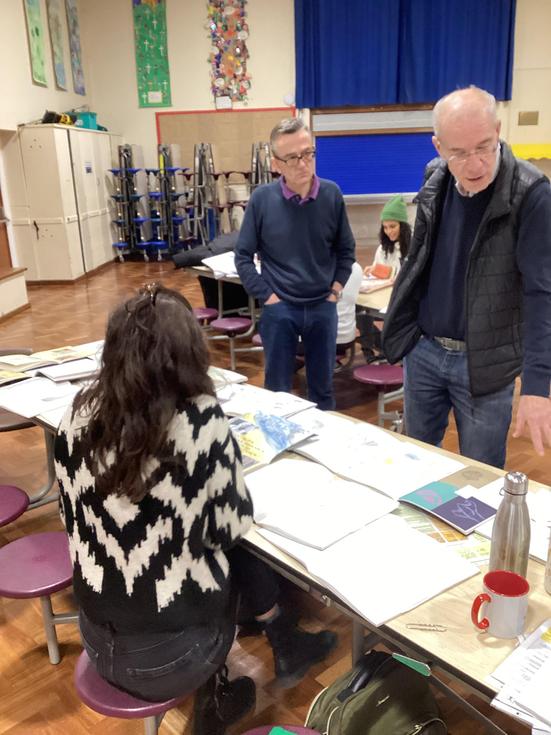
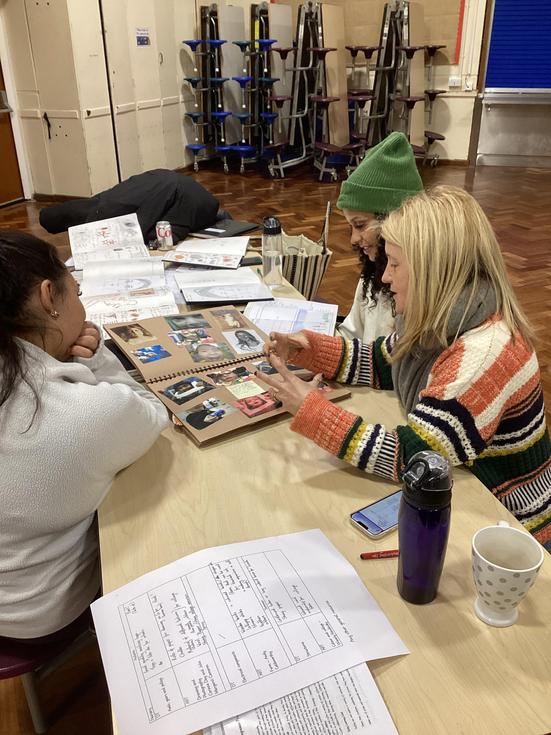
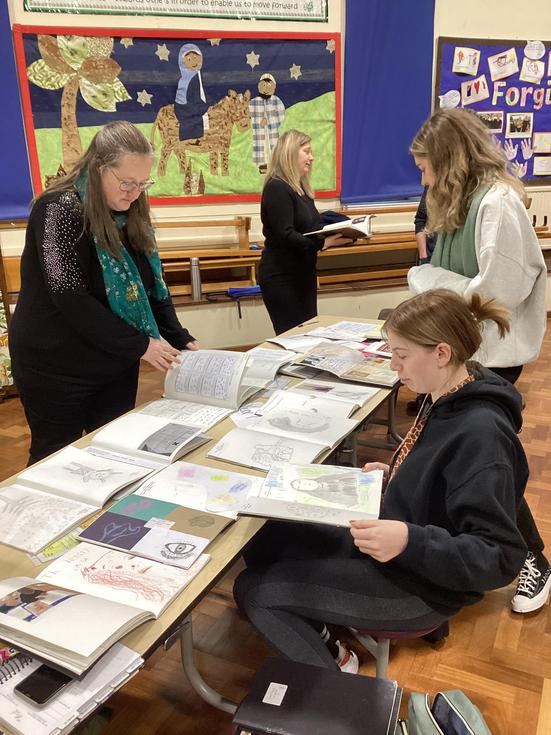
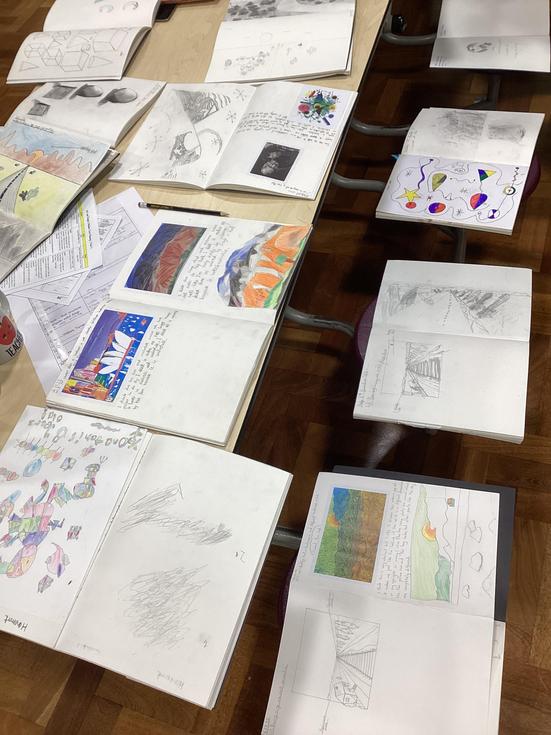
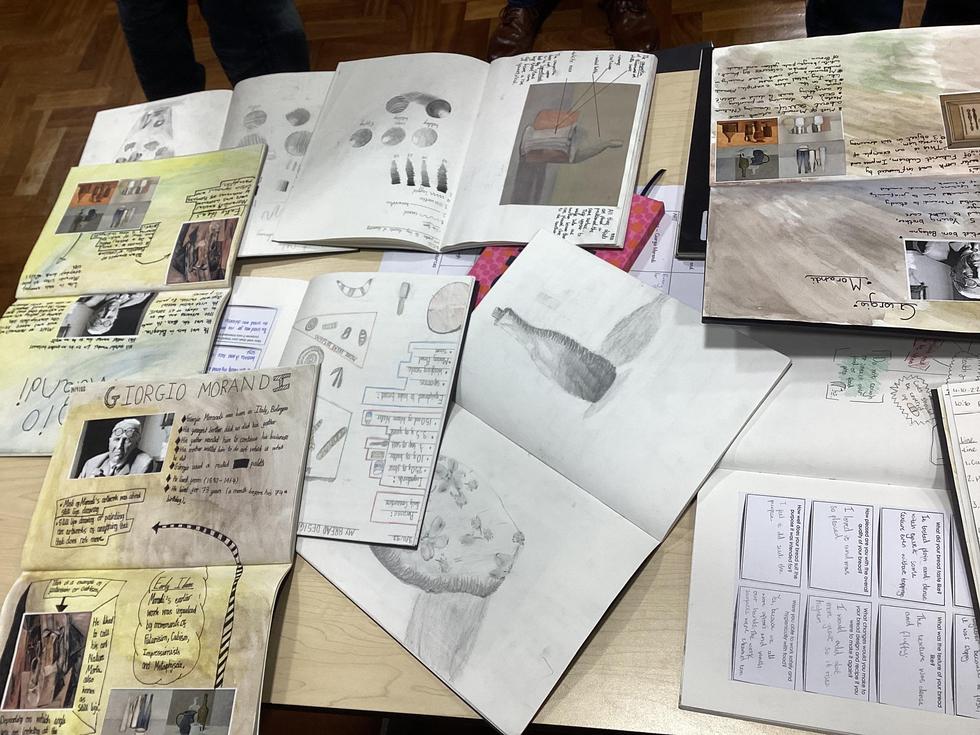
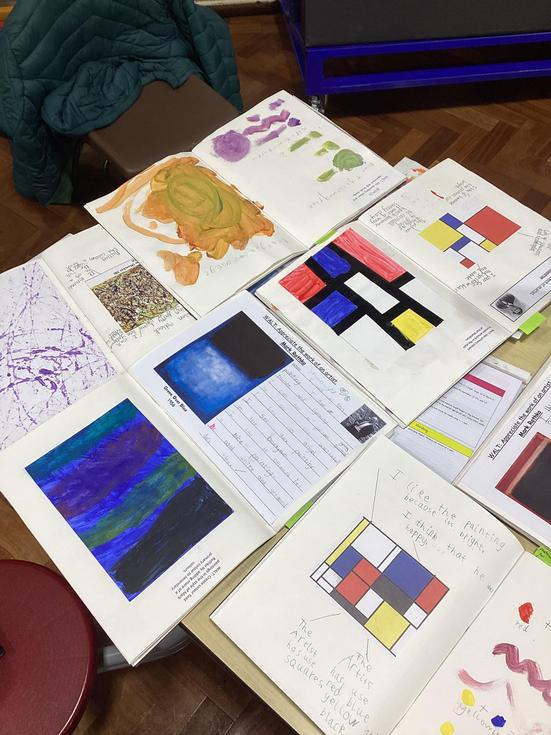
In the afternoon we had a visit from Sue Guthrie who is a local artist who works with Birmingham Education Partnership. She also work in 4 local school teaching art across all year groups. Our aim of the training was to develop our drawing skills including using chalk and charcoal to draw 3D objects, observational drawing, drawing portraits and figures.
We all enjoyed learning new skills and relished the chance to be immersed in art for a day. There were so many tips and teaching points which we felt were really transferable to classroom teaching and we can't wait to try them out.
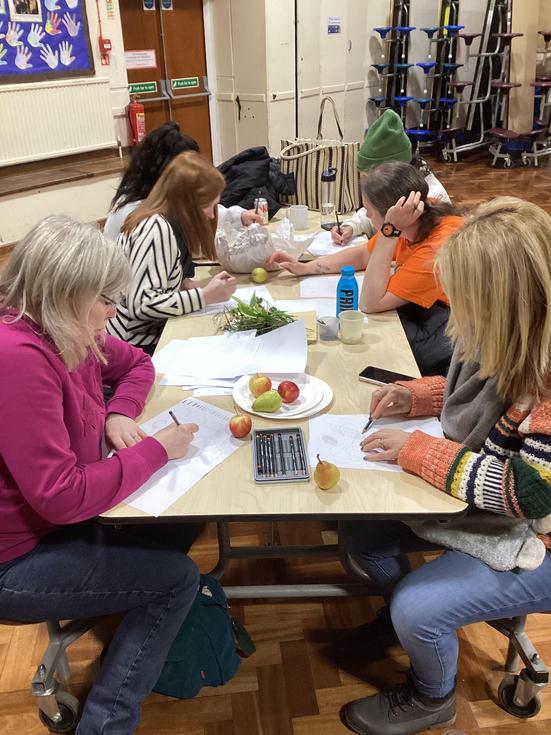
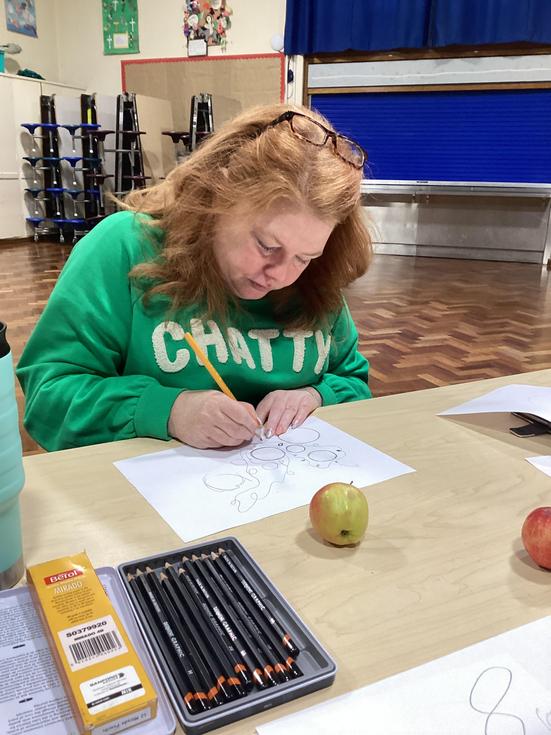
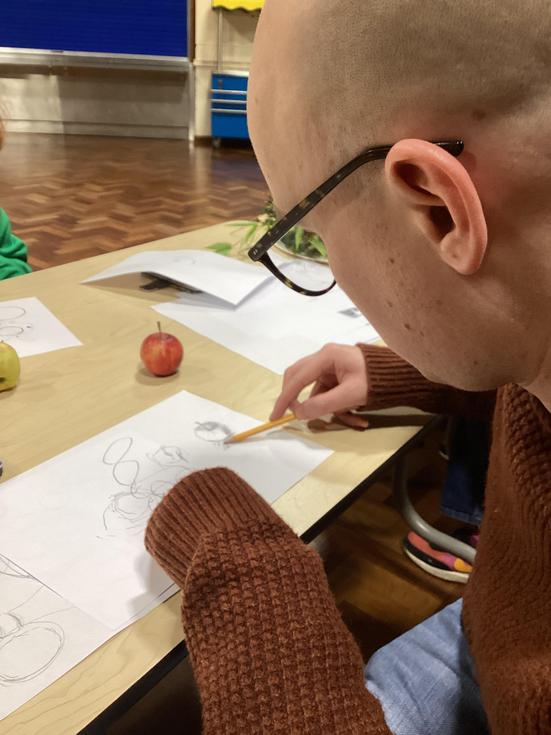
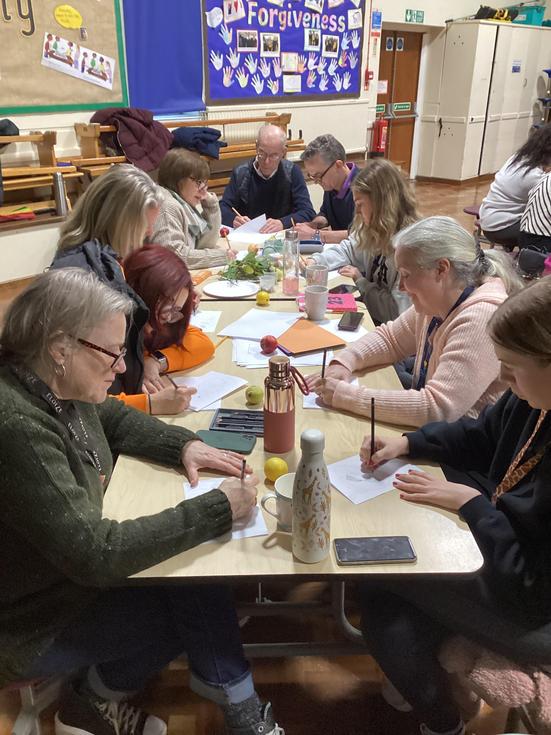
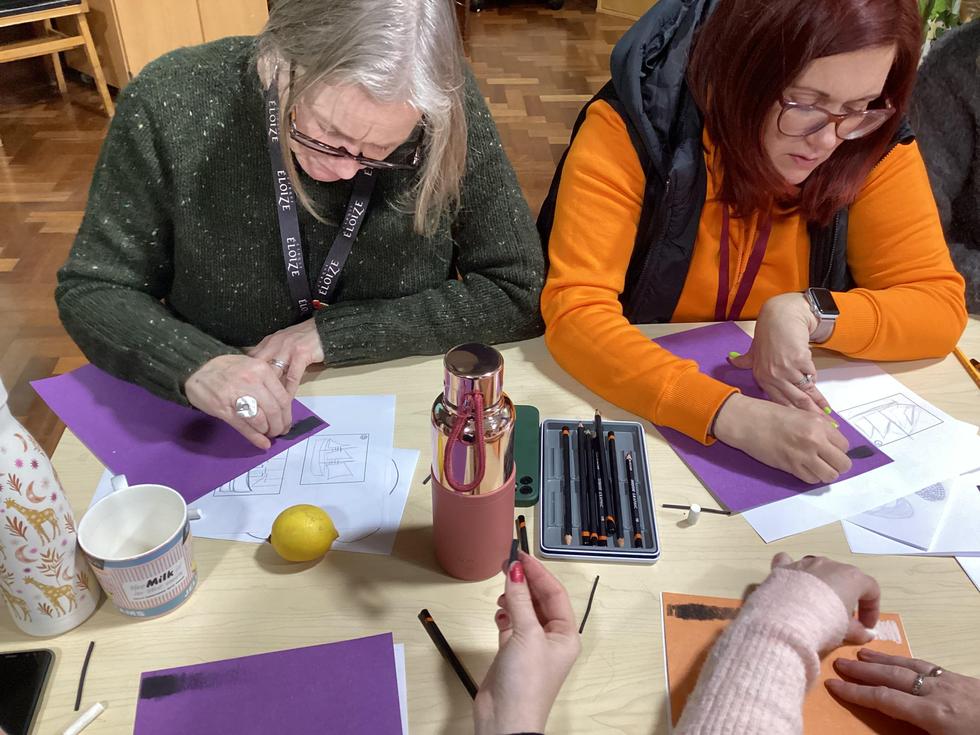
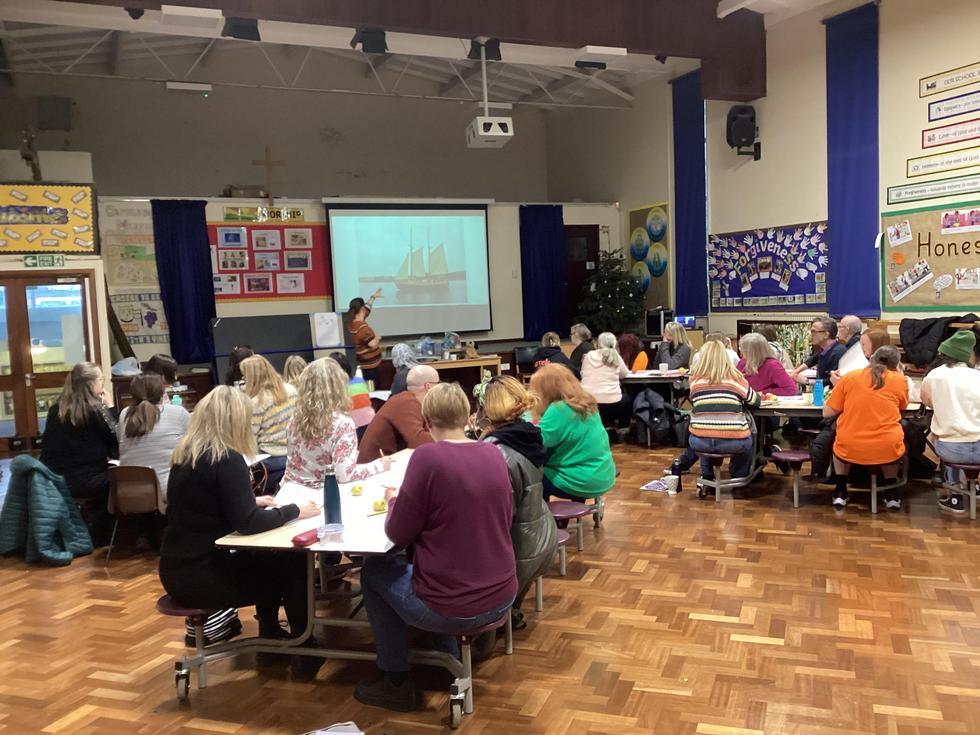
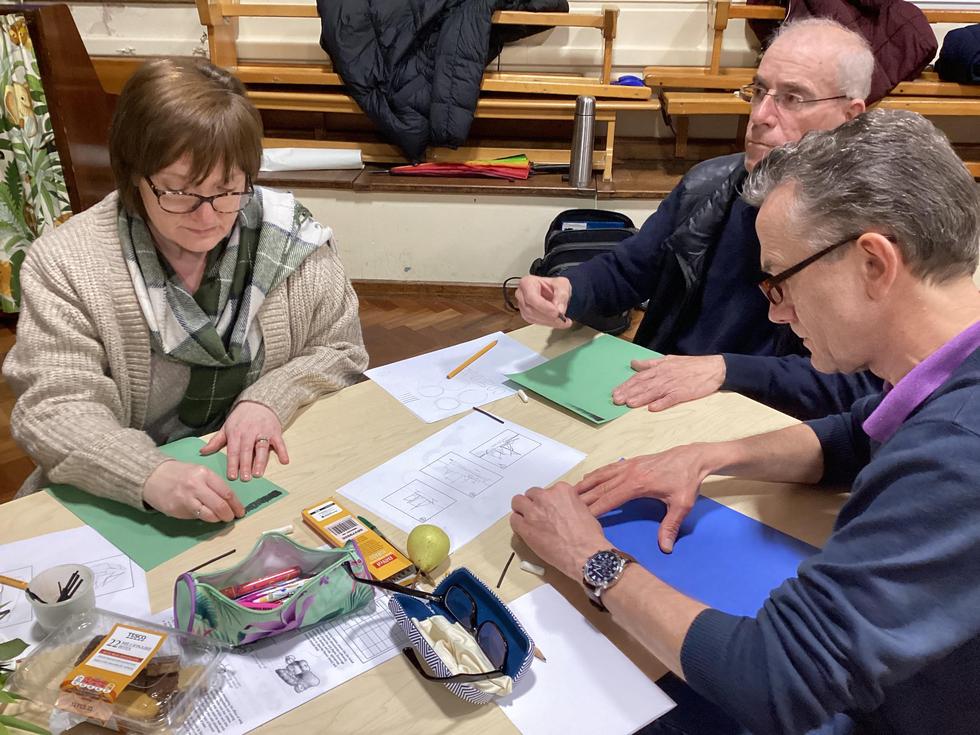
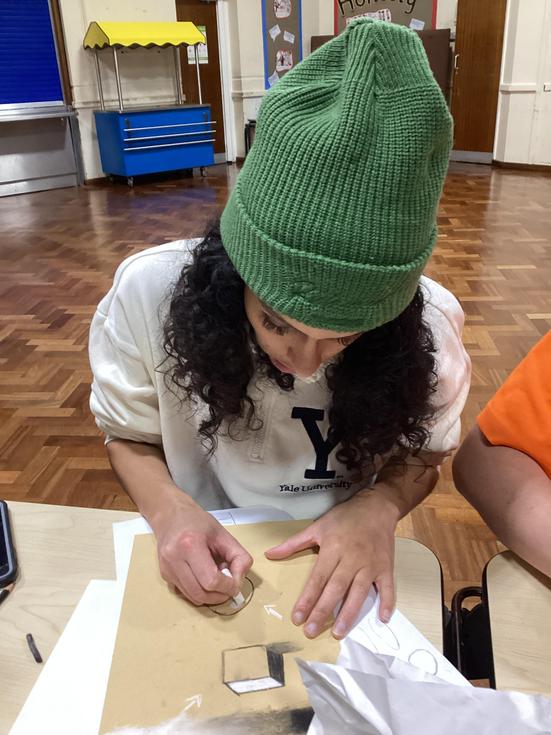
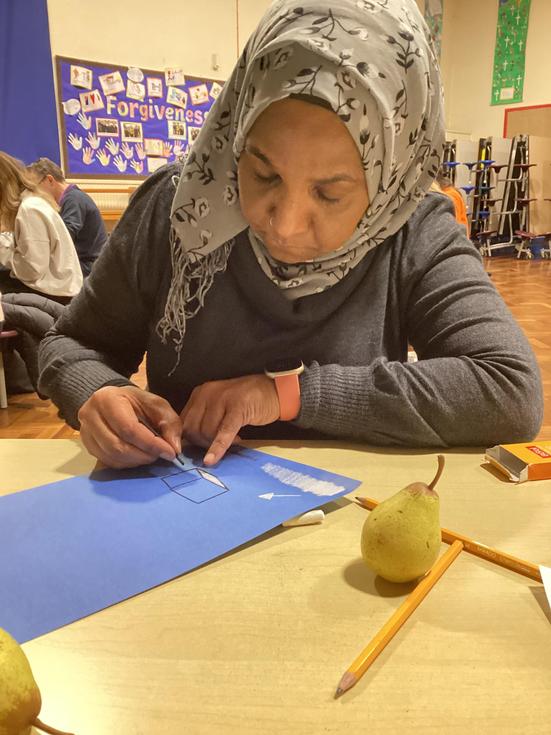
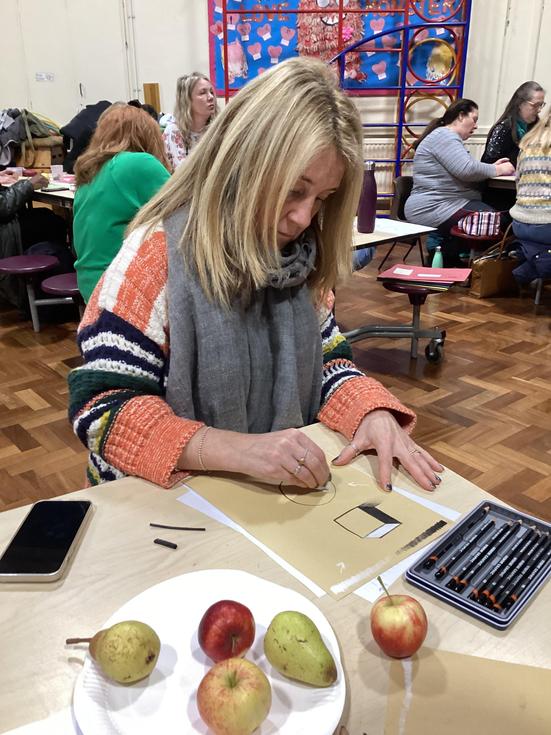
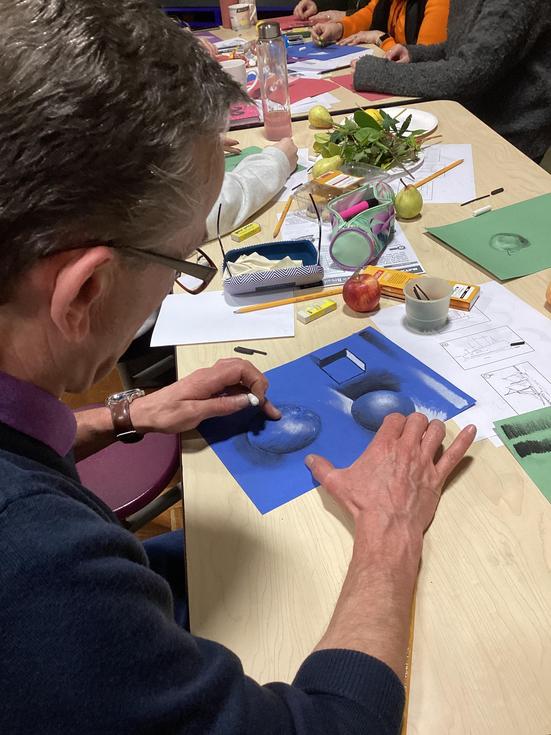
We also uncovered some hidden talents during the session!
2022
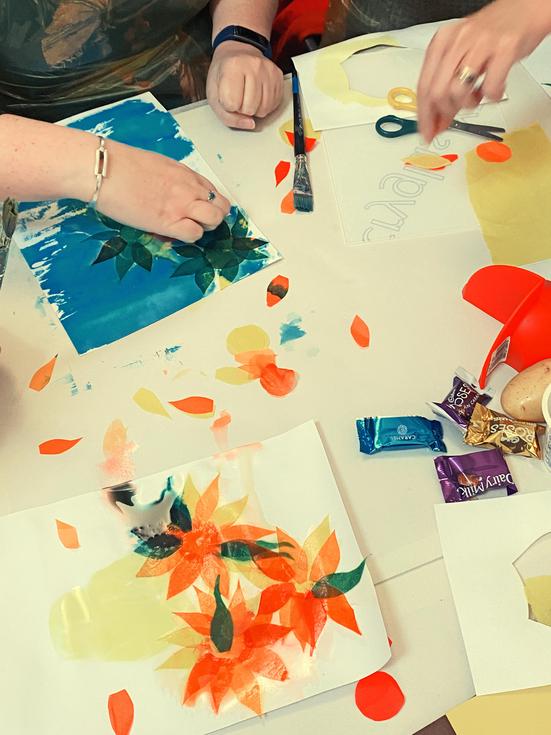
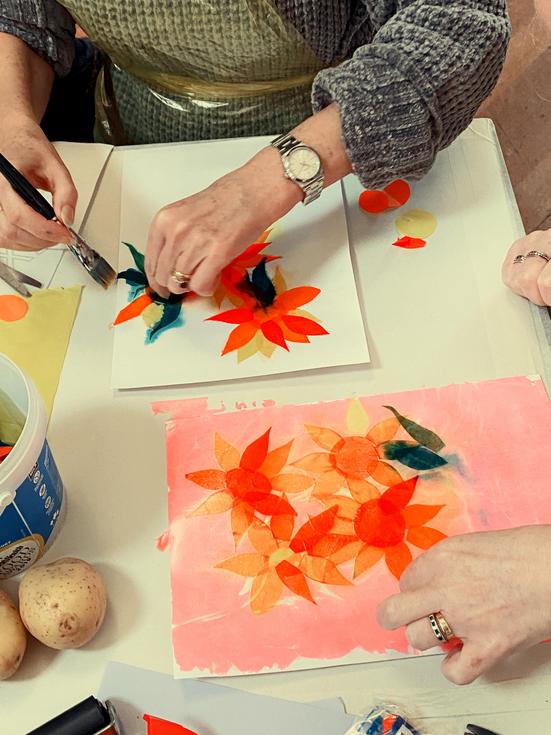
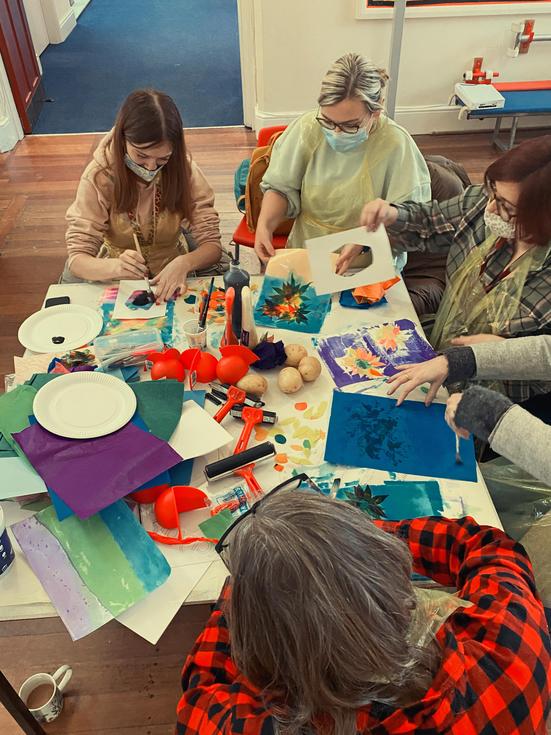
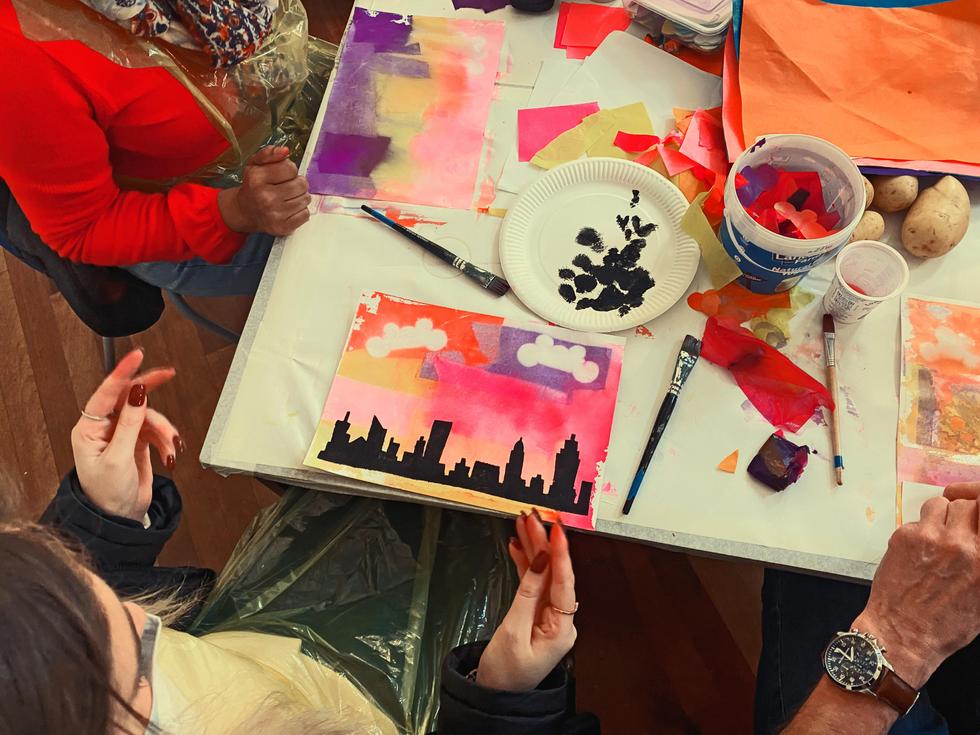
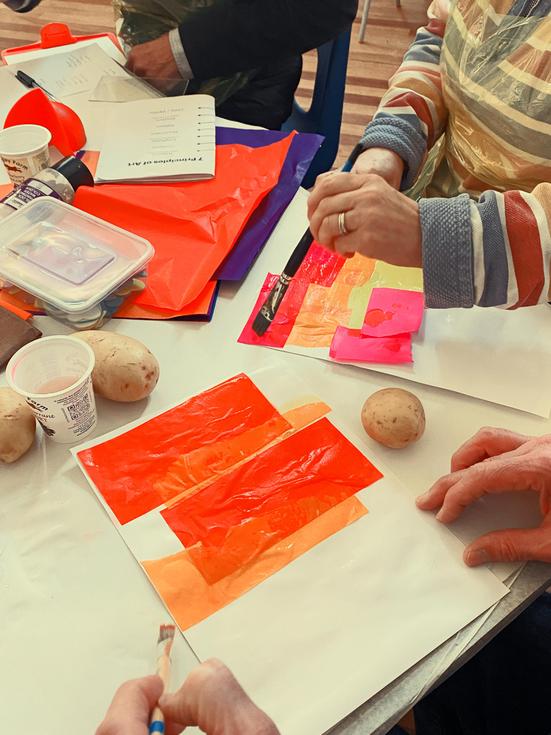
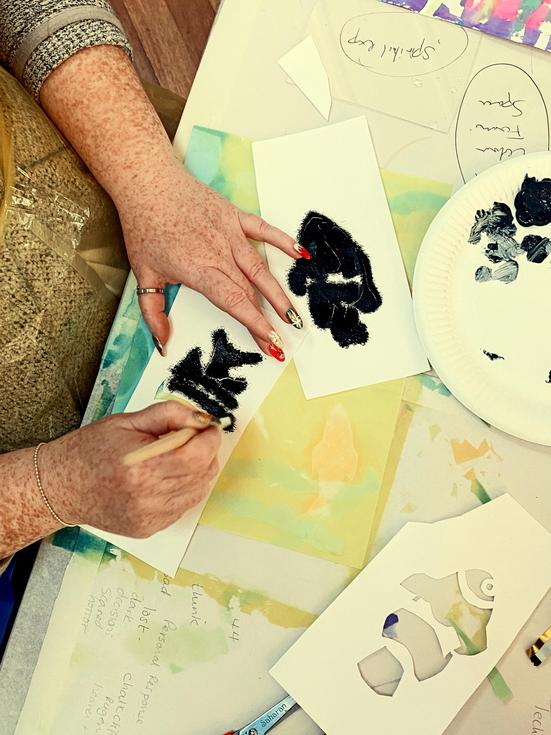
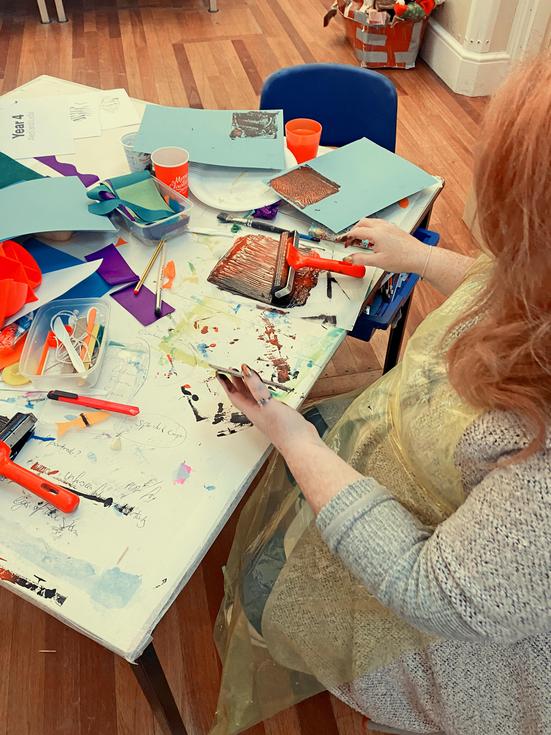
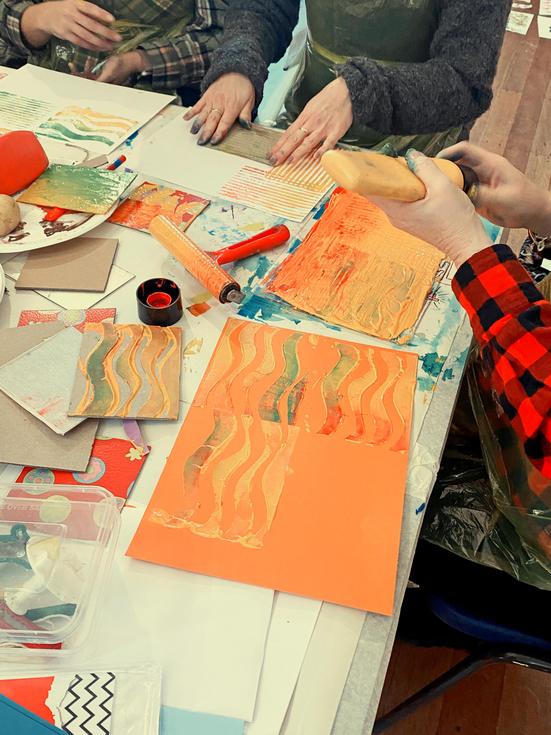
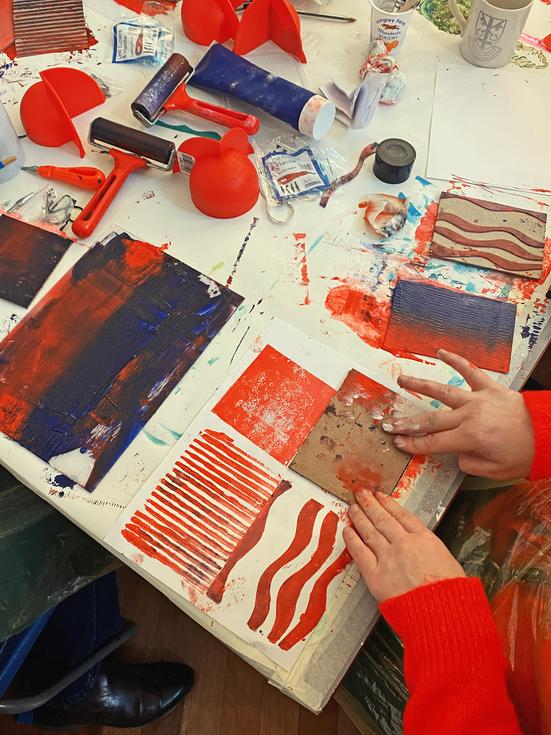
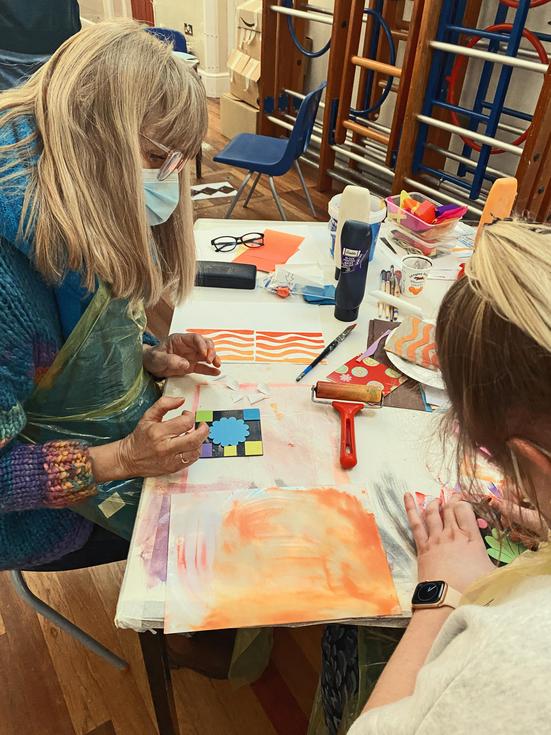
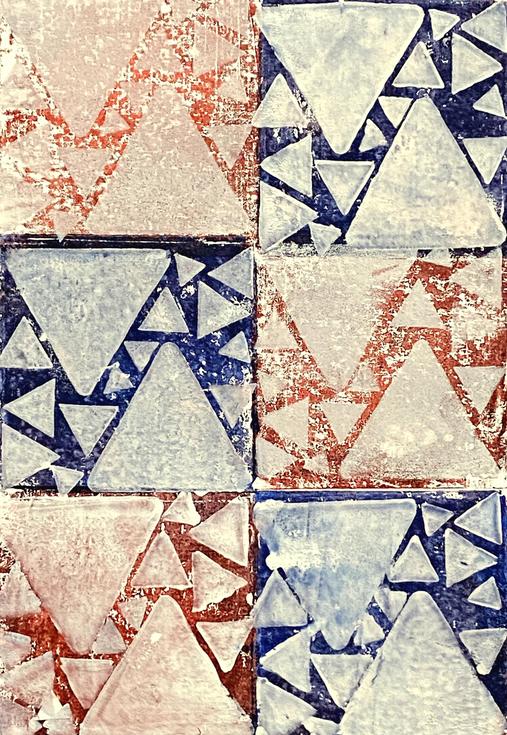
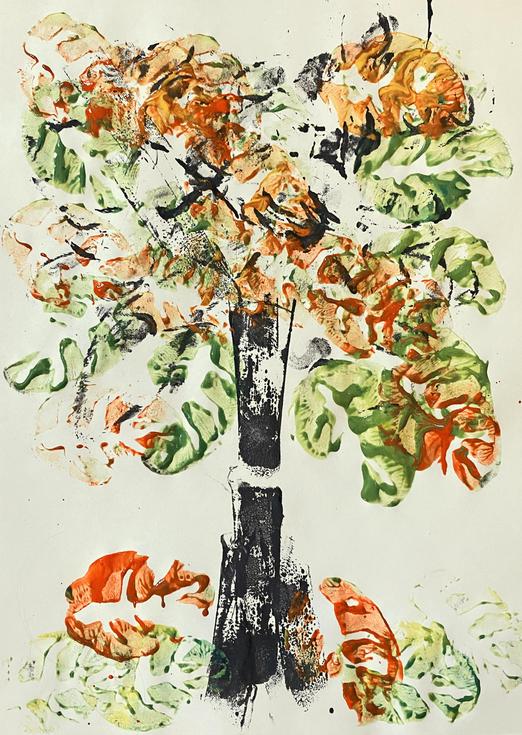
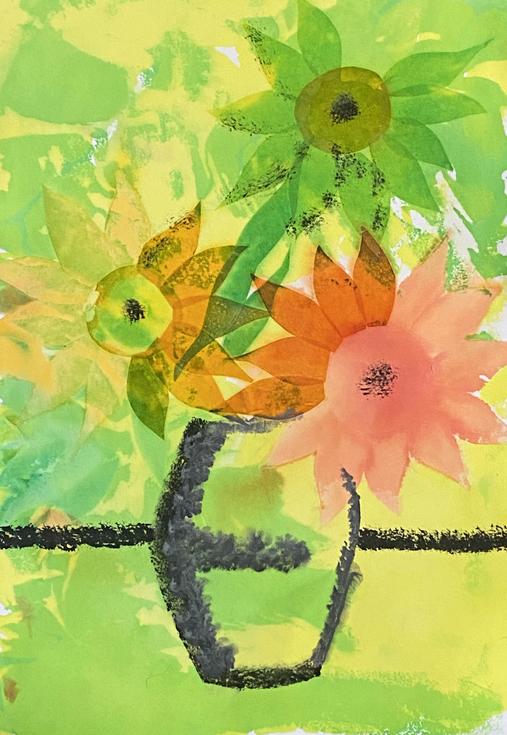
For our teacher training day in January 2022 all teaching staff took part in an Art and Design day. Andrew Fox who is the Birmingham Arts consultant at Birmingham Education Partnership came in and lead the training with Mrs Carby. They talked about the rationale behind our new art curriculum and the steps we need to take over the next year. In the afternoon we were joined by Sue Guthrie who is a local artist. All staff took part in a printing workshop where we learnt different printing techniques and skills to take back into the classroom. Take a look at the the fabulous prints we produced and mess we all made!