St Peter's CE Primary School
Year 2

2B
Mrs Beckett (Monday, Tuesday, Thursday, Friday), Ms Burton (Wednesday)
2H
Mrs Hopkins (Monday, Tuesday, Wednesday, Friday) Mr Jarrett (Thursday)
Teaching Assistants
Mrs Baker, Mrs Lavelle, Mrs Gurney.
What will Year 2 be learning in the Autumn term?
English
We will be reading Greta and the Giants, which is a book based on the environmentalist Greta Thunberg. We will write a diary entry in role based on the book and then write a non-fiction letter to a government representative to campaign for environmental change in the local environment.
Weekly reading comprehension and guided reading sessions take place each week we will focus on a new spelling rule/pattern from the Supersonic Phonic Friends Year 2 spelling programme.
Weekly handwriting lessons will initially focus on correct letter formation and then we will start to teach the children to how to join their handwriting correctly.
Maths
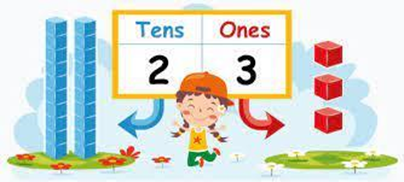
During maths lessons, the children will be focusing on place value, addition and subtraction and shape.
We will follow the White Rose Hub maths scheme and cover the following National Curriculum objectives:
Place Value
- count in steps of 2, 3 and 5 from 0, and in tens from any number, forward and backward
- recognise the place value of each digit in a two-digit number (tens, ones)
- identify, represent and estimate numbers using different representations, including the number line
- compare and order numbers from 0 up to 100; use <, > and = signs
- read and write numbers to at least 100 in numerals and in words
- use place value and number facts to solve problems
Addition and Subtraction
- add and subtract numbers using concrete resources, pictorial representations and mentally, including
-
- a 2 digit number and ones
- a 2 digit number and tens
- two 2 digit numbers
- add three 1 digit numbers
- solve problems with addition and subtraction
- show that addition is commutative (can be done in any order) but subtraction is not
- recognise and use the inverse relationship between addition and subtraction and use it to check calculations and solve missing number problems
-
Geometry - properties of shapes
- identify and describe the properties of 2D shapes, including the number of sides and line symmetry in a vertical line
- identify and describe the properties of 3D shapes, including the number of edges, vertices and faces
- identify 2D shapes on the surface of 3D shapes (for example, a circle on a cylinder and a triangle on a pyramid)
- compare and sort common 2D and 3D shapes and everyday objects
Geography
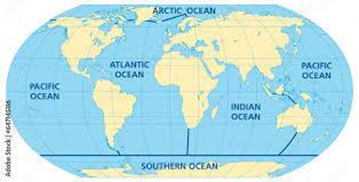
This term we will move on to focus on the world's continents and oceans. We will:
- Use globes, satellite images and geographical vocabulary to describe Earth.
- Understand that a map is a 2D model of the world and know what continents are.
- Explain what an ocean is and name Earth’s five oceans and find out facts about them.
- Use atlases and maps to locate the UK in the world and discuss were we live in the UK.
History
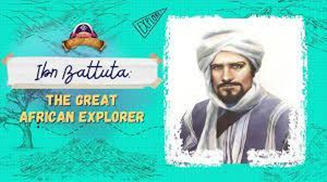
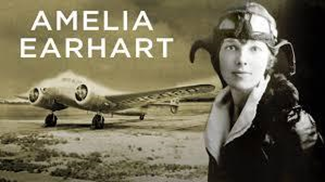
we will be studying a range of significant explorers and answer the following questions:
- Who was Ibn Battuta and why do we remember him today?
- Who was Matthew Henson and what was his role in Arctic exploration?
- Why is Amelia Earhart known as a brave explorer of the skies?
- Why is Neil Armstrong still remembered as a significant explorer today?
- How has exploration changed over time?
- Are there still explorers travelling to new places in modern times?
- How has exploration changed over time?
- How can we remember and celebrate significant explorers from the past?
Science
In Science this term, we will be studying the topic 'Animals, including humans'. The children will complete a series of lessons and be taught to:
- notice that animals (including humans) have offspring which grow into adults
- find out about and describe the basic needs of animals, including humans, for survival (water, food and air)
- describe the importance for humans of exercise, eating the right amounts of different types of food, and hygiene.
Religious Education
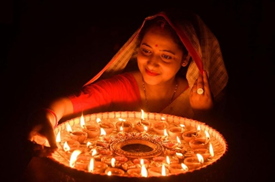
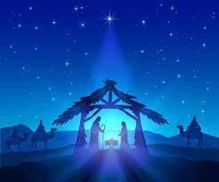
Our RE lessons will start by learning all about Celebrations. We will look at celebrations from different religions, such as: Diwali, Eid, Christmas and Easter.
Then we will complete a unit of work from the Understanding Christianity syllabus and explore Why Christmas matters to Christians.
PE
We will complete units of work on Fitness and Gymnastics.
In the 'Fitness' unit we will:
- take part in a range of activities to develop components of fitness
- explore and develop agility, balance, co-ordination, speed and stamina
- work independently and with others
- develop perseverance and show determination to work for longer periods of time.
During the Gymnastics unit we will:
- explore and develop basic gymnastics actions on the floor and using apparatus
- develop gymnastics skills of jumping, balancing and travelling individually and in combination to create short sequences and movement phrases
- use shapes, levels and change direction in movement sequences
- improve our performance through feedback and recognise elements of high quality performance
- learn to work safely with and around others and whilst using apparatus.
Year 2's PE days are:
2H: Tuesday and Thursday
2B: Tuesday and Wednesday
Please ensure your child comes to school on these days wearing their PE kit - school PE t-shirt (or plain white t-shirt), school jumper/cardigan, black shorts/jogging bottoms/leggings and a pair of trainers.
Art
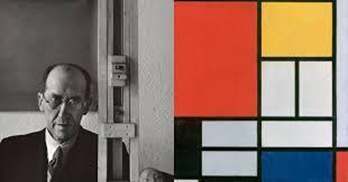
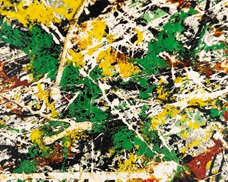
Our Art lessons will focus on 'Colour' this term. In this unit we will:
- explore the work of Piet Mondrian, Mark Rothko and Jackson Pollock and discuss their use of colour. We will then produce pieces of artwork in their style.
- investigate how primary colours can be mixed together to make the secondary colours purple, orange and green
- investigate how colours can be lightened or darkened by using white and black.
Useful Websites
- Active Learn Primary Maths Games If you can't remember your login details or need more games setting, please contact your class teacher. School code:hqx9
- Numbots If you can't remember your login details, please contact your class teacher.
- Times Table Rock Stars If you can't remember your login details, please contact your class teacher.
- Spelling - Tricky words - Look, Write, Check A useful game to practise spelling tricky words and months of the year.
- Reading and Spelling Games This website contains a variety of reading and spelling games for 5-7 year olds.
- Reading - Letters and sounds games This website has a variety of games practising using sounds from across the KS1 and EYFS curriculum.
- Reading - Phonics Play In Year 2 the majority of children will be working on Phase 5 and 6 words, however if your child is finding these difficult please consolidate words from Phases 2, 3 and 4.
- Reading - Phonics Game In this game the children have to read words containing sounds from Phase 5 of the phonics scheme and recognise nonsense words.
- How to pronounce the letters and sounds in the English language correctly. It is important that the children are pronouncing the letters and sounds correctly when learning to read. This video will help parents to support their child and ensure they are modelling the sounds correctly.